Step 1: Phone Triage and Severity Assessment
- Describe the active leak: location, size of stain, drip rate (slow seep, steady drip, or stream).
- Confirm roof type if known: EPDM (black rubber), TPO (white membrane), modified bitumen (asphalt rolls), or built up (gravel surface).
- Note roof age. Most Avon flat roofs run 15 to 25 years before major repair becomes ongoing.
- Identify last weather event: wind over 40 mph, hail 0.75 inch or larger, ice damming, or sustained rain over 1 inch.
- If interior drywall is sagging or electrical is wet, the call shifts to commercial emergency roof repair protocols and interior containment.
- Severity is assessed over the phone by Avon Commercial Roofing dispatch, and inspections are scheduled fast. Active leaks get tarping and dry in prioritized ahead of full diagnostic work.
- Gather building access details: ladder points, hatch locations, parapet height, and any tenant or after hours restrictions that affect crew staging.
Step 2: Interior Inspection Before Going Up
- Photograph every stain and measure the wet area in square feet.
- Use a pinless moisture meter on drywall, plaster, and any exposed decking. Readings above 17 percent indicate active moisture.
- Mark the highest point of the stain. Water tracks down rafters and joists, so the source is usually uphill of the visible damage.
- Check for parallel evidence: insulation matting in the attic, rusted fasteners, or stained truss plates.
- Cross reference interior findings with rooftop layout. A stain near a bathroom often points to a plumbing vent boot, not the field of the roof.
- Inspect suspended ceiling tiles for tea colored rings, white efflorescence, or visible mold growth. Replace any tile with over 25 percent staining.
- Check light fixtures, junction boxes, and exposed conduit. If standing water is present in any electrical component, the affected circuit is locked out before crews proceed.
Step 6: Repair Execution by Membrane Type
- EPDM splits: clean with EPDM primer, apply 6 inch cover tape extending 3 inches past the defect on all sides, roll with a 2 inch silicone roller.
- TPO seam failures: re weld with a hot air gun at 1000 to 1100 degrees F, test the seam with a probe after cooling.
- Modified bitumen blisters: cut a cross pattern, dry the substrate, torch or cold apply a target patch with 4 inches of overlap minimum.
- Pipe boots: replace, do not caulk over. New boots run $40 to $90 in materials, plus labor.
- Pitch pans: clean to bare metal, install new flexible urethane filler with a crown to shed water.
- Built up gravel roofs: spud back gravel 12 inches around the defect, install asphalt primer, set 2 plies of modified bitumen flashing, reflood and recover with matched gravel.
- Substrate temperature must be above 40 degrees F for most adhesives. Below that, crews shift to mechanical patches or schedule for the next dry window above the threshold.
Material Staging Standards
- All membrane patches are cut with rounded corners. Square corners lift first under thermal cycling.
- Primer flash off is verified by touch. Tacky but not transferring to the glove indicates proper open time.
- Seam probes are run at a 45 degree angle with 5 pounds of pressure after the patch has cooled to ambient.
Step 8: Preventive Maintenance Schedule
- Inspect drains and scuppers twice yearly, spring and fall, plus after any storm with hail 0.75 inch or larger.
- Re seal exposed sealant beads on a 5 to 7 year cycle, ahead of full failure.
- Walk seams annually with a probe. Catching a 6 inch seam lift is a 30 minute repair. Catching a 20 foot run is a half day job.
- Maintain a roof log with dates, findings, and photos. Insurance carriers in Avon increasingly request documented maintenance during claim review.
Step 5: Moisture Mapping the Insulation
- Use infrared thermography on a clear evening 1 to 2 hours after sunset. Wet insulation retains heat and glows on the scan.
- Confirm IR findings with a capacitance meter or test cuts. Never rely on thermal alone.
- Mark wet zones with chalk and measure square footage. Wet insulation under 10 percent of roof area is patchable. Over 25 percent generally warrants replacement.
- Cut a 2 inch by 2 inch test plug in suspect areas, inspect the insulation, then reseal with compatible membrane and primer.
- Document findings against the moisture mapping with thermal imaging protocol our crews follow.
Typical Flat Roof Leak Sources in Avon
Ranges reflect typical Central Indiana freeze thaw and storm exposure.
Step 4: Penetrations and Flashings
- Inspect every pipe boot, HVAC curb, skylight, and parapet termination. Penetrations cause the majority of repair grade leaks.
- Pull back loose counterflashing and check for failed sealant. Polyurethane sealants typically last 7 to 10 years on flat roofs in Avon freeze thaw cycles.
- Probe pitch pans. If the filler is cracked or recessed more than 0.25 inch below the rim, the pan is leaking.
- Check behind appliances unit pans and condensate lines. A blocked condensate line can mimic a roof leak. See AC leak water damage repair for the interior cleanup side.
- Inspect parapet caps and wall flashings. Open joints over 1/16 inch admit water during wind driven rain.
- Document fastener back out at termination bars. Any fastener proud of the bar by more than 1/16 inch gets reset and re sealed.
- Check coping stone joints and through wall scuppers. Failed mortar at coping joints is a common but easily missed entry point during sideways rain.
Step 7: Water Test and Documentation
- Flood the repair area with a hose for 15 minutes minimum, working from low point to high point.
- Have a spotter watching the interior with a moisture meter.
- Photograph before, during, and after. Note exact materials and lot numbers used.
- Issue a written report with repair locations, materials, and recommended next inspection date, typically 12 months out.
- If repeated failures suggest end of life, the report includes options under commercial roof replacement.
- File a copy with the building owner, the property manager, and Avon Commercial Roofing records. Lot numbers and photos support any future warranty claims with the membrane manufacturer.
Step 3: Rooftop Survey, Field First
- Walk the perimeter and document drain conditions. Clogged scuppers and internal drains cause 30 to 40 percent of flat roof leaks we see in Avon.
- Inspect the membrane field for: blisters over 2 inches, splits, punctures, alligatoring on modified bitumen, and shrinkage at corners on EPDM.
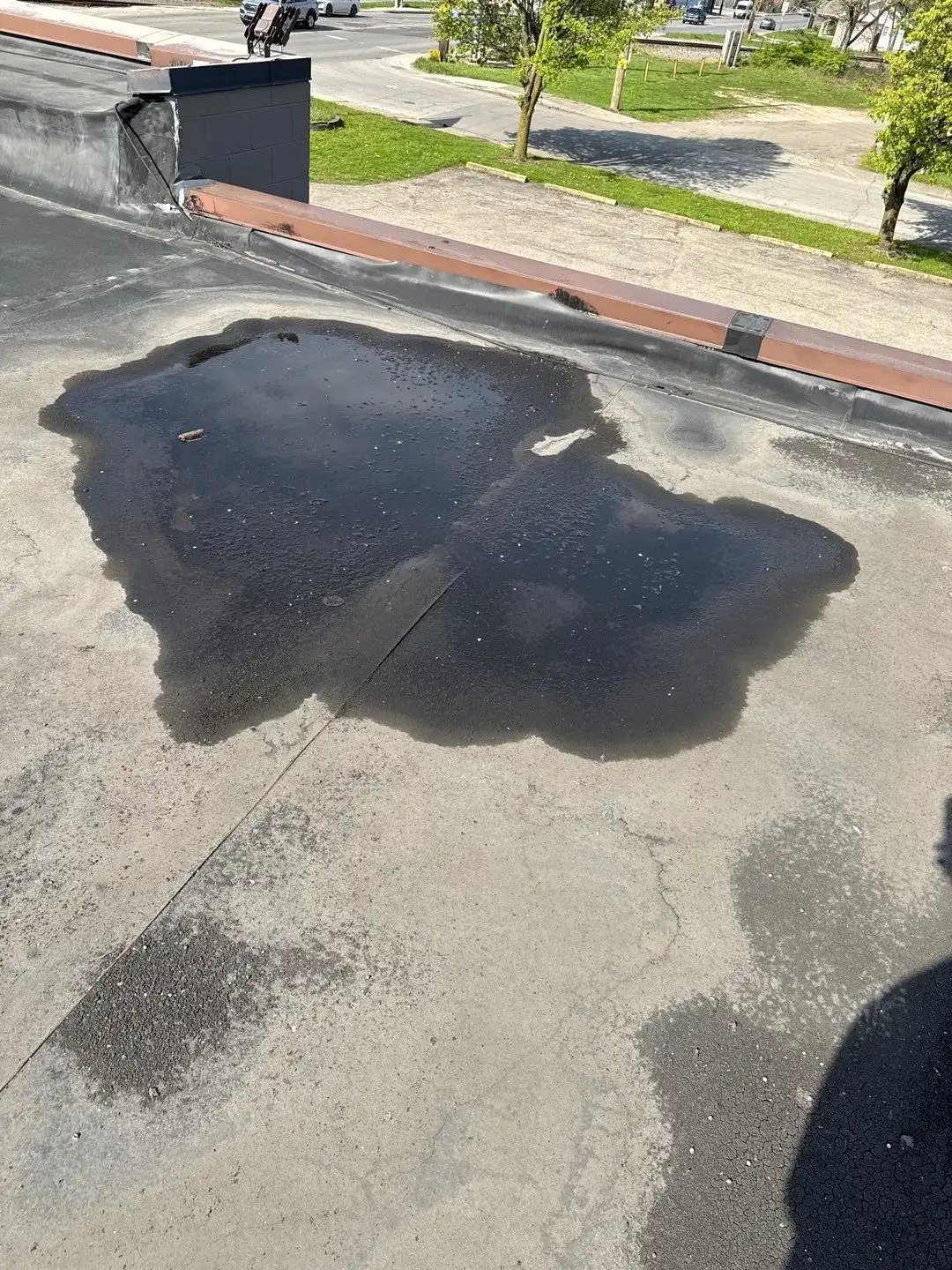
- Measure ponding depth 48 hours after rain. Standing water deeper than 0.5 inch or wider than 10 feet of slow drain area shortens membrane life significantly.
- Check seams with a seam probe. Any lift over 1/8 inch fails and needs reheating or recovering.
- Photograph and GPS-tag every defect for the report.
- Note foot traffic damage near rooftop equipment. Service techs often abrade the membrane within a 6 foot radius of HVAC units, and walk pads are recommended on any path used more than twice per year.
- Check for debris pileups behind curbs and at the upslope side of skylights. Leaves, branches, and shingle granules from adjacent steep slopes trap moisture against the membrane.